
 5.0
5.0
Why wedding dress alterations need their own timeline
A wedding gown is rarely a single appointment. The dress is shaped to your body in stages, and each stage depends on the one before it: the bodice must sit correctly before the hem is marked, and the hem depends on the shoes and foundation pieces you will actually wear. Planning backward from the wedding date keeps every step unhurried and gives the garment the attention it needs.
Elegant Stitch schedules bridal work at the Nicholasville shop with the gown, the complete outfit, and the event date in hand. Exact timing is always confirmed per gown and current capacity — but a practical planning sequence makes the whole process easier.
A practical bridal alteration sequence
As soon as the dress arrives
Try the gown on with the shoes and undergarments you expect to wear, and note where it feels wrong: straps that slip, a bodice that gaps or pulls, a hem that catches, a train that needs management. Photos in natural light help you describe what you see. This is the right moment to contact the shop and discuss the gown, even before you are ready to book fittings.
The first fitting
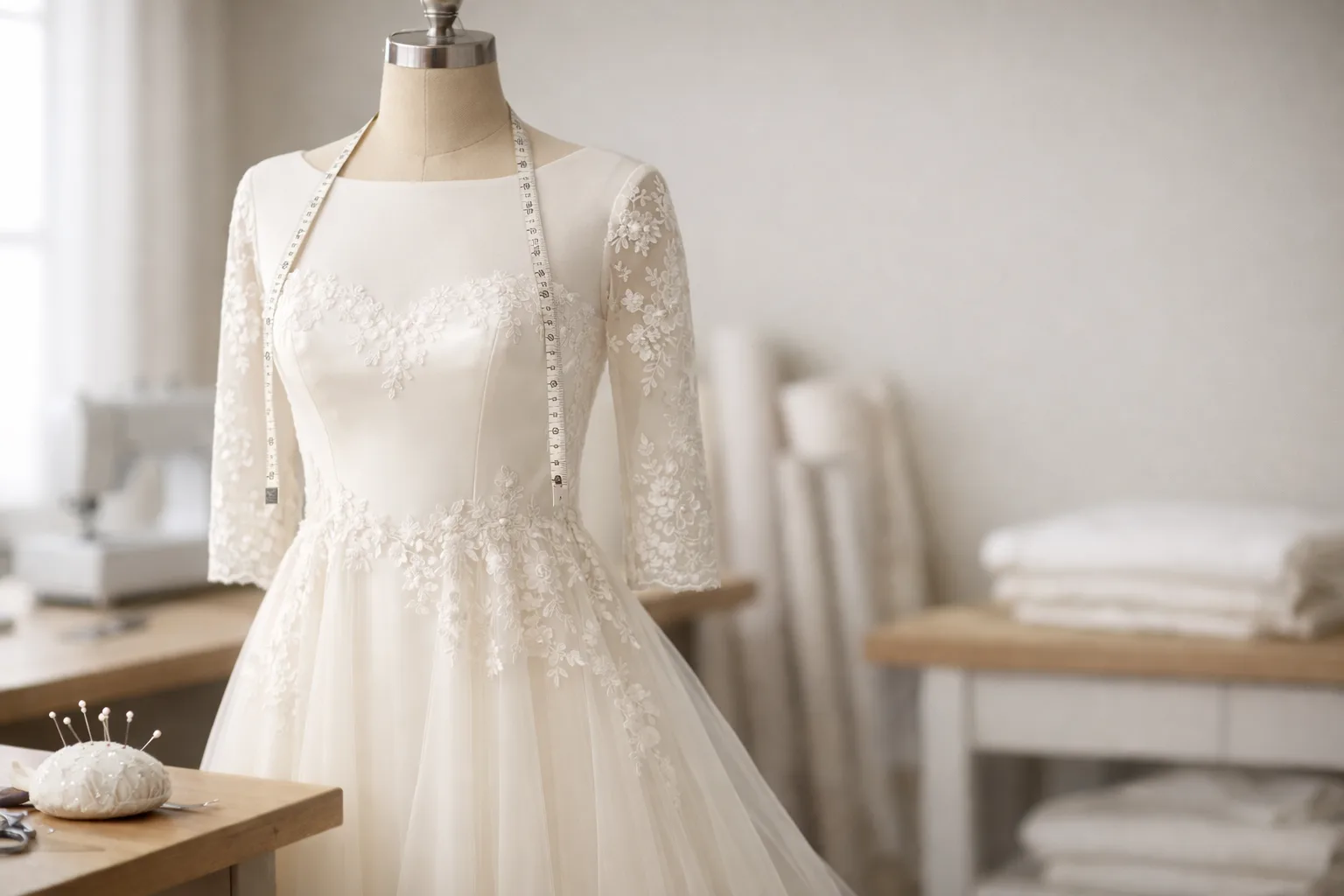
Bring the gown, your wedding shoes, and the foundation pieces you plan to wear. At this fitting the major changes are identified: bodice and waist shaping, strap or sleeve work, and the overall silhouette. Complex construction — boning, corsetry, lace, beadwork, multiple layers — is inspected so the plan respects how the dress was built.
Middle fittings
As the work progresses, the gown is checked on your body again. Hem length is marked with your actual shoes, and details like a bustle for the train are planned around how you want to move at the reception. Weight fluctuations between fittings are normal; speak up about them so the final fit can be adjusted.
The final fitting
The last appointment confirms the finished fit: comfort, movement, hem, bustle, and closure. Try sitting, walking, and raising your arms. This is also the time to ask about steaming or pressing before the wedding day and how to transport the gown safely.
What affects bridal timing
Every gown is different. The factors that most often shape the schedule include:
- Construction complexity. Boning, corset backs, layered skirts, and built-in cups take more careful work than simple silhouettes.
- Fabric and embellishment. Lace, beadwork, sequins, and delicate fabrics slow the work because seams must be opened and finished with extra care.
- The scope of changes. A hem and a strap adjustment is a smaller plan than resizing a bodice or restyling a neckline.
- Your calendar. Bridal parties, portraits, and travel can all create earlier wear-by dates than the wedding itself.
- Shop capacity. Bridal work is scheduled around the shop's existing commitments, so earlier conversations always leave more room.
For a broader look at how alteration timing works beyond bridal, read how long alterations take. If the wedding is close, review rush alteration requests and contact the shop with your exact date — rush capacity is never automatic, but a clear deadline makes the conversation practical.
Bridesmaids, mothers, and the rest of the party
The same planning logic applies to the whole wedding party. Bridesmaid dress alterations are simpler per garment, but several dresses on one event date are easiest when they are planned together. Mothers of the bride and groom, and anyone in formalwear, benefit from the same complete-outfit approach: shoes, foundation pieces, and the real wear-by date at the first fitting.
Start the conversation early
You do not need every detail settled to begin. Share the gown, the wedding date, and what you already know about the changes you want, and the shop can explain what the fitting sequence would look like for your dress. Explore wedding dress alterations for what the work includes, review the alterations FAQ to prepare for your first fitting, or request a fitting at the Nicholasville shop.
Plan backward from the wedding date
Wedding dress alteration timeline
A wedding gown is one of the most carefully fitted garments a person will ever wear, and the alteration timeline should be planned backward from the wedding date — not forward from the day the dress arrives. Most gowns need more than one fitting, and each fitting should have enough time between it and the next for the work to be completed and checked.
First fitting — weeks before the wedding
Bring the gown, shoes, and foundation garments. The tailor evaluates the full scope of work: hem, bodice, straps, bustle, and any structural changes. This is when the main plan is confirmed.
Second fitting — mid-process check
The gown is partially altered. You try it on to confirm that the changes are progressing correctly. Minor adjustments can still be made at this stage.
Final fitting — close to the wedding
The completed gown is tried on for final approval. This is when you confirm the fit, comfort, and movement, and arrange pickup or pressing.
How many fittings are needed and how far apart they should be scheduled depends on the gown, the changes, the construction details, and the shop's current volume. Contact Elegant Stitch with your gown and wedding date as early as possible so the shop can help build a realistic schedule.
Wedding dress alterations
What to bring and how to prepare for a wedding dress fitting at Elegant Stitch.
Bridal and formalwear
Coordinate bridal party fittings, bridesmaid dresses, and formal event garments.
Rush alteration requests
Contact the shop immediately if your timeline is compressed — availability depends on the gown and current capacity.